Reverse-chronological, all the way down — from independent work today
back through Google, Amazon, and the Navy, to a dorky kid who skipped three
grades and wound up being a bit quirky forever after.
I had a nonlinear path, right up until I became a professional software engineer in
1992. Since then, I have been bouncing back and forth between leadership and IC
roles for 35 years. Right now I'm doing consulting, but I have a lot of irons in
a lot of fires. Who knows what I'll be doing next. I've been busy for a long time,
and I doubt I'll be slowing down any time soon.
2025 — Present
8 months
Kirkland · Remote
Ghost Track
Independent · Ghost Track
June 2026 — Present
Advisor & Consultant
I am now advising and consulting on AI engineering transformation,
through advisor equity grants with selected companies,
and hands-on client engagements with a wide variety of customers.
I started doing paid client engagements before I admitted to myself
that I was becoming a consultant. I had four of them in early 2026
that all went super well, and people continued to reach out asking
me about keynotes and workshops. Ultimately I was convinced to pivot
to doing this full time.
That's how I wound up deciding to create this website. People kept asking me for
a bio. This is it.
Nov 2025 — May 2026 · 7 mos
Mayor of Gas Town
Independent. I was mostly working on
Gas Town
and Beads,
and doing a bit of blogging.
My goal during this time was to predict the future. I spent untold millions
of tokens building massive systems, and learned enough to be able to see
another 6 to 9 months into the future. At that point I realized I was blocked
primarily by AI literacy — it's hard to convince people to use orchestrators
and software factories when they're not even using agents.
Gas Town was a highly successful experiment, and it ultimately led to me
handing the whole thing off to the Gas City Inc folks and community
maintainers. I still cut releases and tinker with Gas Town, but my focus
is now on consulting and advising companies.
Gas Town
2022 — 2025
3 yrs 2 mos
Kirkland · Remote
Head of Engineering, Sourcegraph
Feb 2024 — Oct 2025 · 1 yr 9 mos
Software Engineer
I stepped down from HoE to start coding, so I could get my hands dirty.
This is something I've done three times in my career now.
I needed to know what was going on with AI. I helped build Cody,
Sourcegraph's first (chat-based) AI assistant. This is when I wrote
the Death of the Junior Developer and started down the path to
discovering Beads and inventing Gas Town.
Sourcegraph's Amp division split off from Sourcegraph in October 2025,
taking the cofounders with it, and that was a perfect moment for me
to leave as well, to pursue my career as an independent.
With the Sourcegraph crew · Seattle
Sep 2022 — Feb 2024 · 1 yr 6 mos
Head of Engineering
I joined Sourcegraph to help bring Google-style code search and code
intelligence to the entire world. Upon arrival, I reset the culture, raised
the engineering bar, and helped shepherd the company through the AI pivot
when ChatGPT landed a few weeks after I joined.
After 18 months as HoE, I started noticing AI was heating up,
and I felt like I didn't understand it very well. So I worked
with my boss, Quinn Slack (CEO), to move into an IC role where
I could explore AI and try to predict the future.
2020 — 2022
2 yrs 6 mos
Kirkland
Founder, Wyvern RPG
Ghost Track · Self-employed
Wyvern —
an online game I've been working on for thirty years. It is sleepy now,
but scheduled for a glorious return by 2028 or so.
I had already brought my game back up in 2017 and ported it to Cloud. But
it needed a modernization pass, better mobile clients, and a ton of new
features, such as a new event system for building responsive live quests.
Covid provided the perfect excuse for me to take time off, dive in, and
update the game.
Despite having dozens of whales who'd drop hundreds to thousands a
month on the game, Wyvern was only barely profitable, and was struggling
to find a broader audience because of its steep learning curve.
So after a couple of years of tinkering, I decided to jump back into
industry, and joined Sourcegraph.
2018 — 2019
5 months
Online
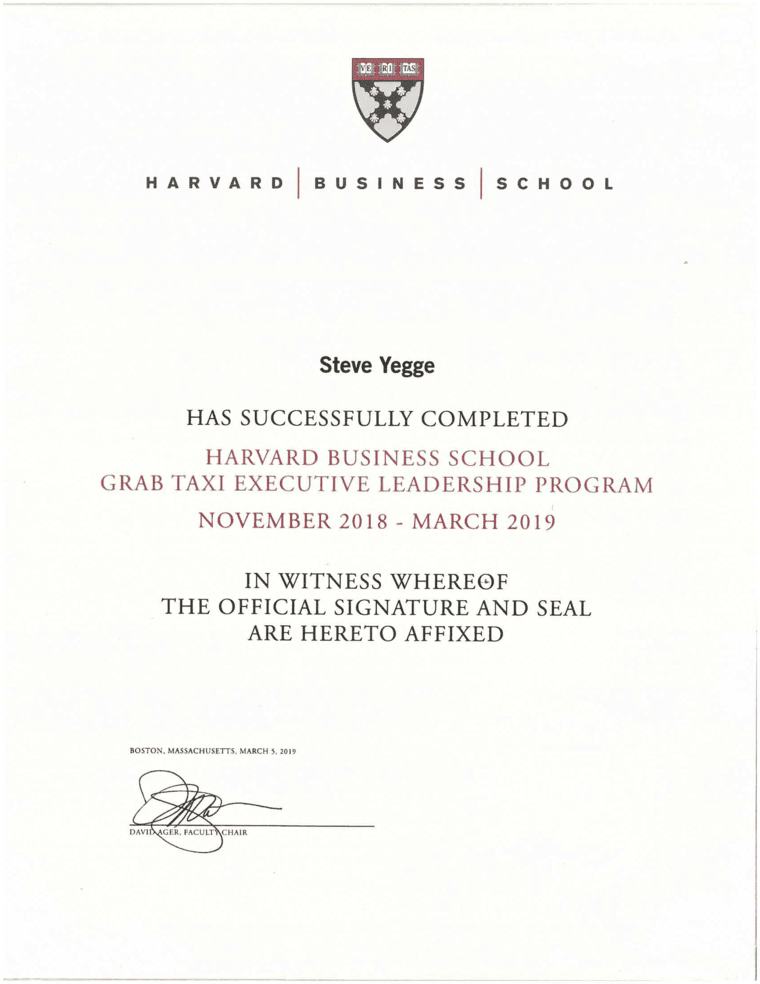
Certificate of completion
Executive Leadership Program
Harvard Business School Online
HBS Online (now HBX) put together a cohort tailored for Grab leadership,
which ran roughly 5 months, November 2018 – March 2019.
We had ten classes, each with a different topic, professor, and set of case
studies. Dr. Francis Frei's course was the best, but they were almost all
awesome. The obligatory finance one was meh. I especially enjoyed the Clay
Christensen "Innovator's Dilemma" series.
The videoconferencing technology they use for the classes was absolutely
breathtaking, even back in 2018.
2018 — 2020
2 yrs 5 mos
Bellevue, WA
Head of Engineering, Ads & Monetisation, Personalization, and Data Insights
Grab
Grab is Southeast Asia's largest mobile-tech company — rides, deliveries,
payments, and financial services in one super-app for a region of
~620 million people. I led many successful initiatives there, and one
famously unsuccessful one. My successes included the GrabAds engineering
buildout from zero, now winning awards in the region.
I also led teams that delivered, among other things, Grab's world-class
audience segmentation platform, the "Pythia" offline campaign
optimization project, and Grab's data monetization platform.
I had an absolutely wonderful time at Grab, and miss working there.
Covid stopped all travel, ending my time with the company abruptly.
But I wrote extensively about my experiences there, and still go back
to visit now and then.
2005 — 2018
12 yrs 8 mos
Kirkland
Senior Staff Software Engineer
Google
Launched and contributed to many projects across Search, Ads, Cloud,
Developer Infrastructure, and Android.
The biggest piece of work was the creation of Grok
(now Kythe):
Google's internal code knowledge graph, used in conjunction with Code Search
to navigate, understand, and refactor Google's entire codebase. It became the
#1 most loved developer service inside Google, with a 99.9% satisfaction rating.
I started at Amazon on Dec 21st, 1998, two days before my brother Dave died
of non-Hodgkins Lymphoma at age 23. They sent me home and told me to report
back at midnight, where I packed books in the Seattle distribution center
until 8am. We did the same every night through the New Year.
My first gig there was as a Technical Program Manager (TPM) working
under Kim Rachmeler (for Rick Dalzell). My project was to save Santa,
by leading the cross-company split of our monolithic database into
services, before the Christmas 1999 traffic destroyed our Oracle instance.
It was the biggest project in the company's history, at the time, and the
beginning of the services migration that led ultimately to AWS.
After the 1999 service migrations, I joined Customer Service Apps, where I
had many adventures, and ultimately took over the team as manager. Under my
tenure, we built a CS web application to replace the command-line tools and
Emacs that hundreds of CS reps had been using. They got mad when we took Emacs
away.
Then I led some internal dev productivity teams, and started up the Amazon
Developers Journal, which is where my internal "drunken" blogging began. By
the time I left Amazon in 2005, I had pretty broad readership inside the
company. I published all the posts publicly after I joined Google. Werner
Vogels then reached out and asked me to take one of them down, as it revealed
too much. I complied. I'm going to try to find that essay someday and
re-publish it. It was a good one!
I started at Geoworks as an engineer, after completing a six-month co-op.
Everything we wrote there was in 8086 assembly language: the operating
system and all the applications, including a word processor, spreadsheet,
and much more.
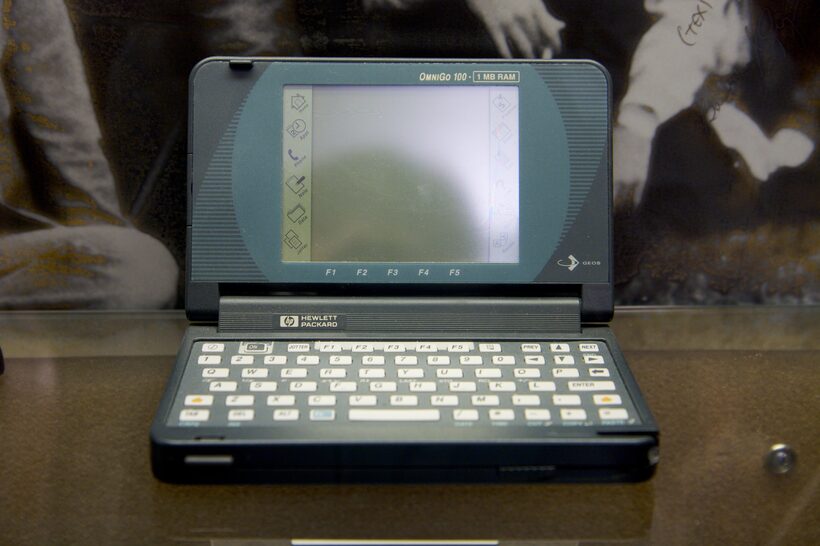
I grew quickly and soon led teams of 10 to 40 engineers across
three development centres on two continents to deliver two handheld PDA
devices with H.P. Singapore — the HP OmniGo 100 and 120.
The Geoworks hiring bar was crazy, and everyone there was super smart.
This inspired me to push myself, gave me role models, and set the stage
for my future obsession with eng productivity. They were already obsessed
with it before I got there!
1992 — 1995
3 years
Seattle
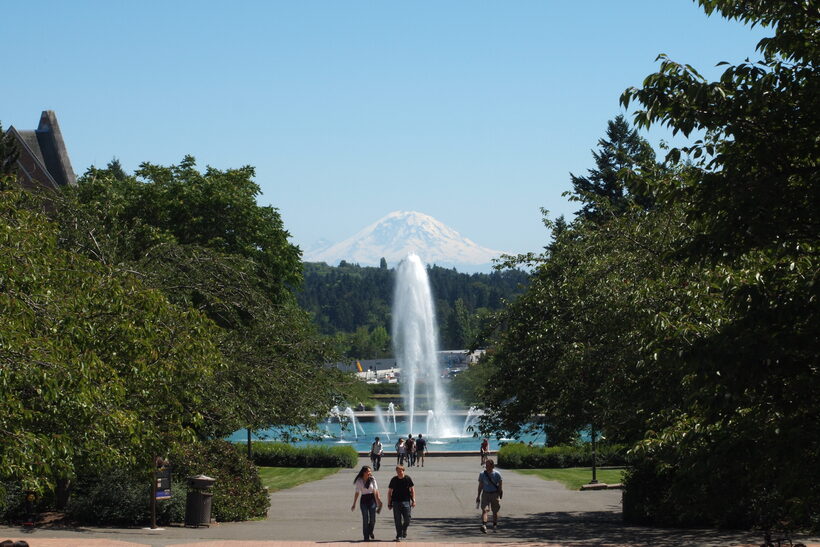
UW · Rainier Vista
B.S., Computer Science
University of Washington
I started at UW in summer 1989 under the Navy's NECP (now STA-21) program. I was
attending with a full ride on the GI Bill, but also had full enlisted pay and
benefits. I lived in the dorms and had a pretty normal college life. Except I
also got up at 4am once a week for drills in Red Square, had to go to class in
uniform on Tuesdays, worked out with the ROTC kids, and had a variety of other
enlisted responsibilities.
After I took the early-out, I took a full-time job at Geoworks,
and completed my CS degree part-time, finally graduating in 1995.
1987 — 1992
5 years
Orlando · Idaho Falls · Seattle
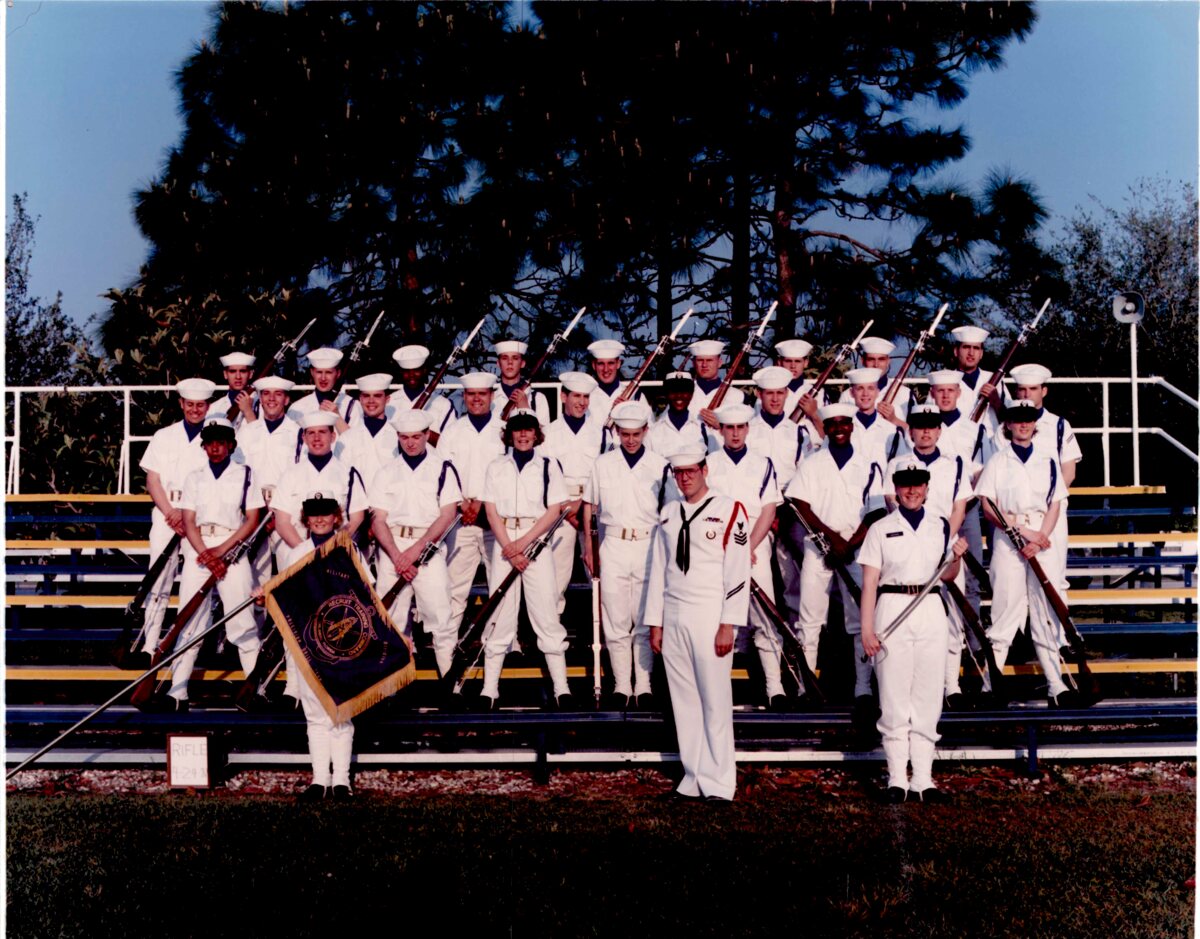
Drill team · Orlando Steve, 3rd from left, middle row
U.S. Navy
Electronics Technician, Nuclear — ET2 / E-5
Enlisted at eighteen. Started programming in 1986, on the way in.
Continued programming, reading voraciously, and playing guitar
through my entire stay in the Navy.
Summer 1989 — 1992 · University of Washington · NECP
Naval Enlisted Commissioning Program
Selected for NECP and sent to the University of Washington to study
toward a commission. A Clinton-era cutback program brought me an honorable
discharge and an early-out before commissioning — and, in 1992,
my first civilian job at Geoworks.
I then had about eight or nine years of recurring nightmares that I had
inexplicably re-enlisted in the Navy, and I'd be out at sea before I woke up
in a cold sweat. By the seventh year of having this nightmare, I was just a
Navy contractor, it was pretty funny.
1988 — 1989 · Idaho Falls
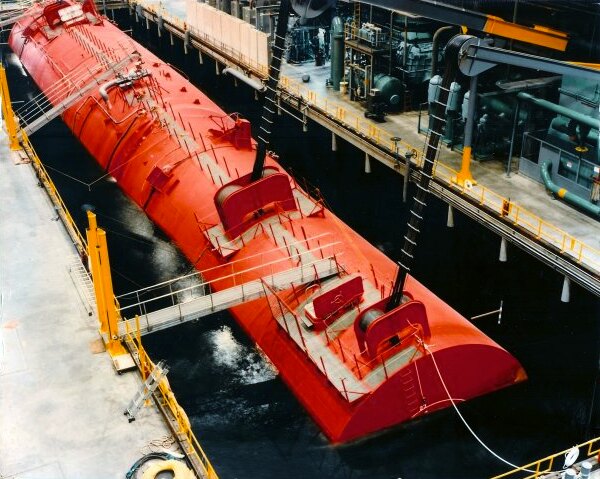
S5G Reactor Prototype
Qualified on the S5G reactor prototype at the DOE's Naval Reactors
Facility in Idaho — operator training on a live plant.
It was situated about sixty miles out in the middle of a huge bare desert.
This is for good reasons. I have so many stories about my relatively
short time there.
For instance, the second-worst civilian nuclear accident on US soil
(second only to Three Mile Island) happened while I was there, and my
supervisor caused it. And once everyone was screaming at me from the
window on the way back from lunch because a giant radiation cloud was
coming. Oh, and once a civilian got trapped in the reactor compartment for
eight hours, but fortunately nobody turned the reactor on. That's, like,
a sampling. It was a crazy place.
Back then, that massive concrete ditch in the picture was empty,
not full of water. That is the back half of a real nuclear submarine.
The reactor is about 4 stories tall. Good times.
S5G prototype · Idaho
1987 — 1988 · Orlando
Nuclear Power School (NNPS)
Graduated near the top of my nuke school class,
about eighteen months after enlisting. We learned how to do
calculus with a slide rule, it was pretty weird. Also learned
all about nuclear reactors, which was fun.
This was in Orlando, Florida. Every day at 4pm, the sky would
crack open and dump huge sheets of water on us, just as class
was getting out. Also people would get eaten by alligators a
few times a year. My bunkmates and I played a pirated copy of
Ultima IV around the clock for months.
Naval Nuclear Power School
1987 · Orlando
Electronics Technician “A” School
Electronics Technician training, before nuclear power school.
We consumed frightening amounts of coffee, cigarettes, and NoDoz.
I started smoking a pack a day in the Navy because it was the only
way to get breaks in boot camp. It was ten years before I was able
to quit smoking.
Electronics Technician rating
1986 — 1987
1 year
Rancho Cucamonga, CA
Chaffey College
Pre-engineering
A second year of community-college pre-engineering before enlisting.
Had some pretty hardcore physics and math teachers, all things considered.
I was still playing guitar full time.
My most intense memory was riding my bike to school one day, and my neighbor
drove by, and saw me and stopped. He was crying. He told me the Challenger had
just exploded.
1985 — 1986
1 year
Glendora, CA
Citrus College
Pre-engineering
Community-college; pre-engineering coursework. I rode my ten-speed bicycle
there every day. The college had an amazing music library with thousands of
LPs in thick green protective cases. I would sit for hours and listen to
classical performances. When I started at Citrus, all I knew was Rush, Zeppelin,
and 80s metal. In that library I discovered Bach, Beethoven, Horowitz, Richter,
Gould. One of the most peaceful times of my life.
1983 — 1985
Senior ×2
Alta Loma, CA
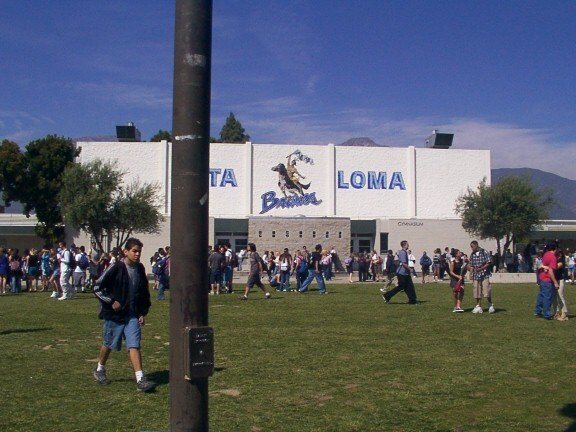
Alta Loma High School
Alta Loma High School
Twelfth grade
I repeated my senior year, on purpose. Did not want to graduate
at age fourteen. I finally had friends my age, and was having fun.
I asked to stay back, they let me because of Driver's Ed, which
I hadn't been old enough to take, and I took a bunch of AP courses.
1982 — 1983
Junior
Olympia, WA
Oly Bears
Olympia High School
Eleventh grade
Thirteen years old, junior. My favorite of the four high schools I attended.
People had stopped noticing how young I was all the time. I had some of my
best teachers, and was bringing my guitar to school. Good wholesome times.
1981 — 1982
Sophomore
Paradise, CA
Paradise Bobcats
Paradise High School
Tenth grade
Spent a year there, great school, made some good friends,
all about three years older than me, so it was awkward at times.
Tragically, the town of Paradise was destroyed
by the Camp Fire in 2018. I pray for my old friends.
One noteworthy memory: Mr. Critchfield, my Biology teacher, told us one day
that none of us would ever have an original idea. Lovely thing to tell a
classroom full of rural sophomores.
Never forgot you, Critchfield. You inspired me to spend
my life proving you wrong.
Webb school somehow foolishly let me in at age eleven, after doing a
bunch of tests on me. They don't let kids skip grades anymore, for good
reasons. But I made out OK.
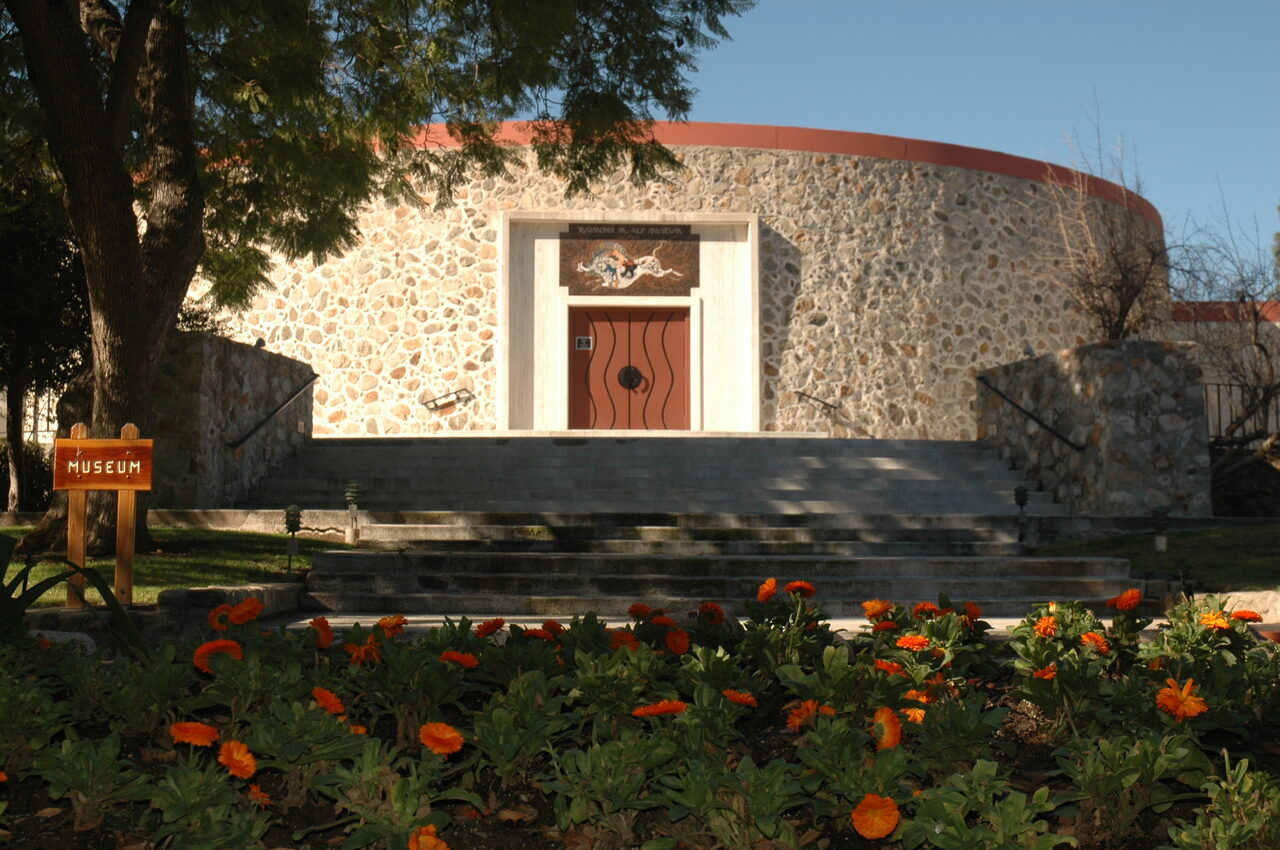
It really was a once-in-a-lifetime experience. The campus is nostalgically
beautiful, the dorms are exquisite, the teachers were all kind and wise, the
food was delicious. It was a boarding school. I lived there, with my own room
due to my age. I remember being advanced in English and French, behind in Algebra,
and middling in everything else. My favorite song was Hot Blooded by Foreigner,
followed closely by Mr. Blue Sky by ELO.
One of my (many) favorite memories there was visiting the Raymond M. Alf
Museum of Paleontology on campus, as any 11-year-old would, and Raymond Alf
would give us tours himself. He once showed us a giant coiled metal arrow,
probably a dozen feet long unrolled, and told us it represented the history of
the Earth, and that human civilization was just the dust on the end of the
coil.
1969
Day one
Fullerton, CA
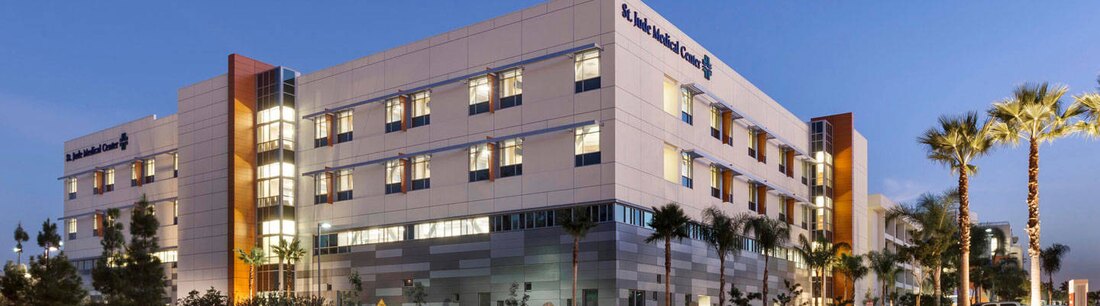
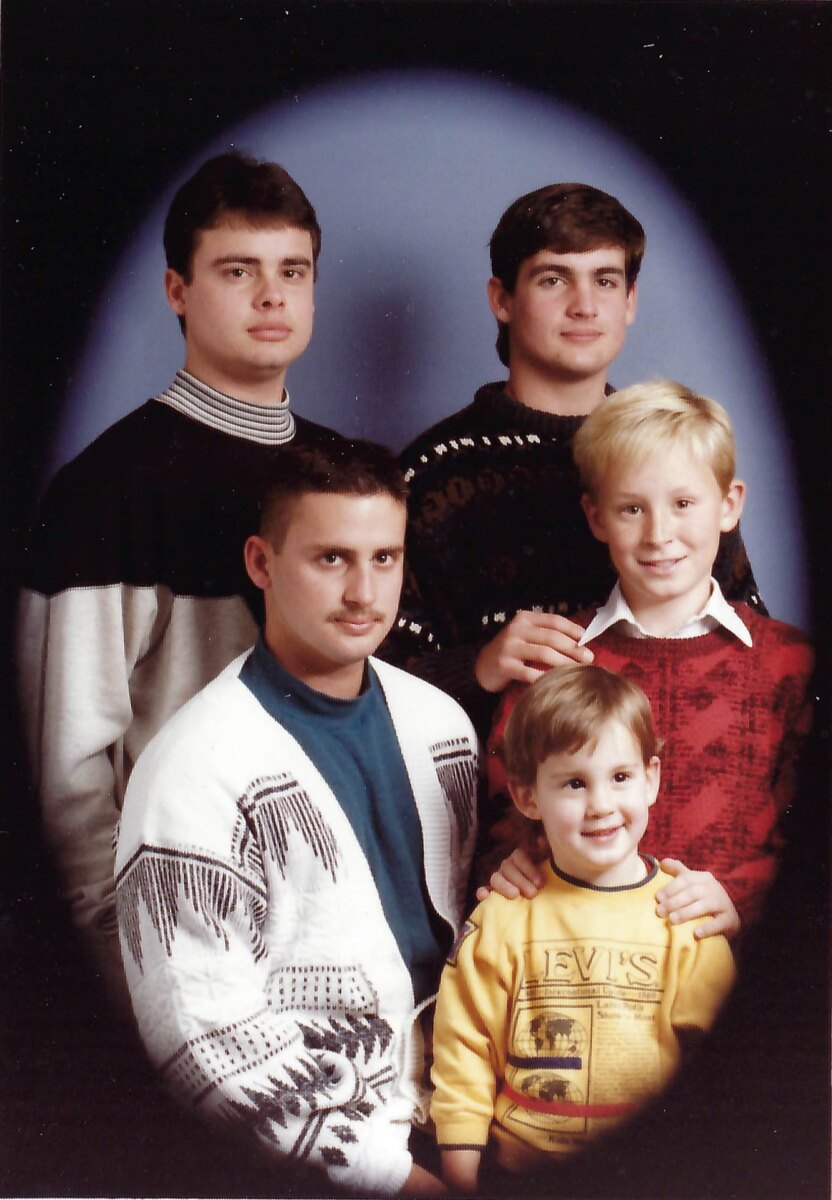
St. Jude Medical Center · FullertonClockwise from UL: Steve, Dave, Michael, Kevin, Mike
Born
Providence St. Jude Medical Center — Fullerton
I was the ugliest of five children.
Photographs via Wikimedia Commons:
The Webb Schools (Alf Museum) — Scott Nichols
(CC BY-SA 3.0) ·
HP OmniGo 100 — Marcin Wichary
(CC BY 2.0) ·
University of Washington — Keng Susumpow
(CC BY 2.0) ·
Sourcegraph logo
(CC BY-SA 4.0).
The Alta Loma High School photo, the S5G prototype photo, the U.S. Navy Electronics Technician rating badge and Naval Nuclear Power School emblem, and the Google, Amazon, Grab, and Geoworks logos are public domain. School logos and other marks belong to their owners.