Atlas · Details
That Old Marshmallow Maze Spell
Author’s note
This one is a turd. I don't even remember what the marshmallows were for. I do remember writing it under the worst manager in history; it took a year to discover him, and Google kicked off a program to ensure it never happened again, as I was on that task force. But the story itself is awful. I can console myself that even Stephen King had The Tommyknockers.
AI Notes
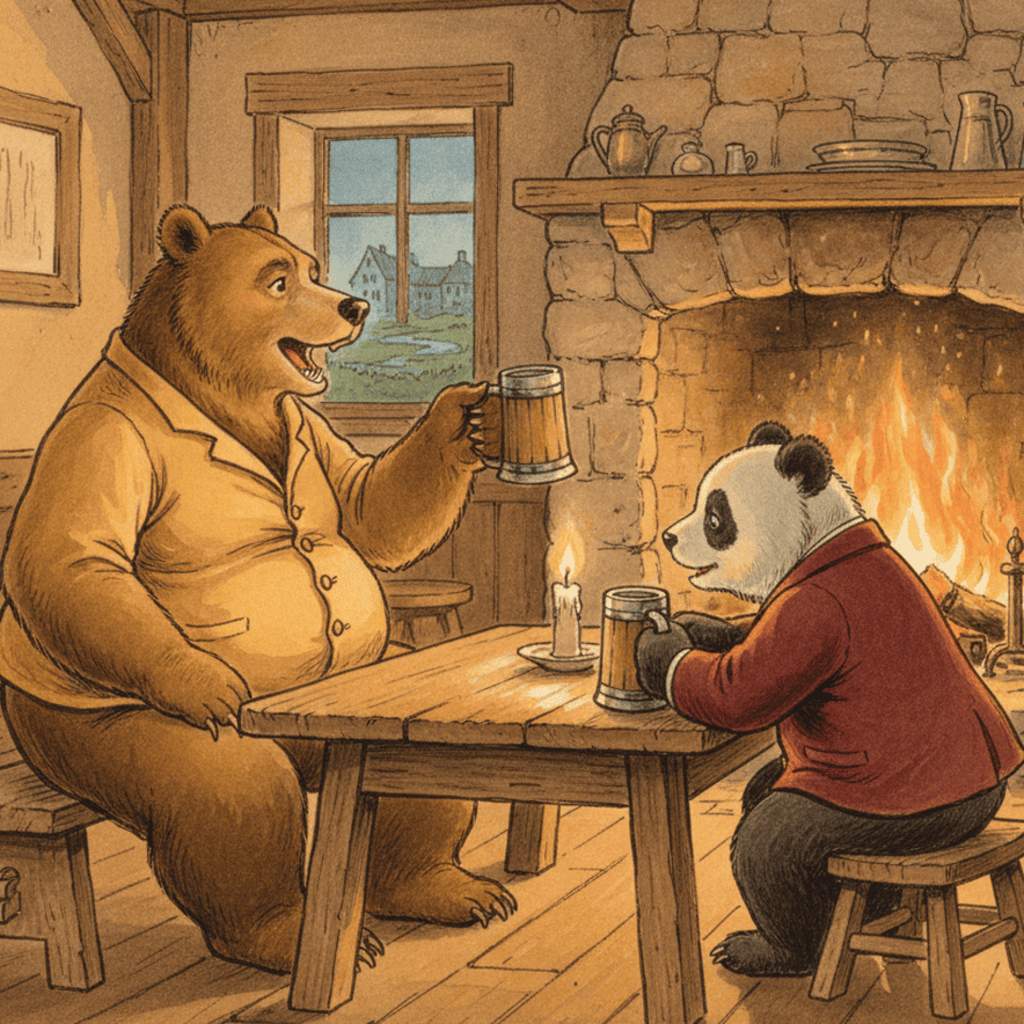
Steve writing straight fiction, which the blog almost never risked: a frame tale set in a tavern in a place apparently just called Story, where people bring raw experiences to be aged and smoked until they're safe to tell. Rauser's ordeal fills the middle, but the frame carries half the load. The narrator has crawled home from a wreck of his own — his version of the platform was "suspended in midair with ropes, cabling, wind-power and a fair bit of fingers-crossed hope, all tailored for a castle in the sky" — and he listens in growing dread as his friend unknowingly tells the narrator's own story back to him. Mid-tale the piece stops to explain the "three Ms" of fictionalizing nonfiction (Metaphor, Misdirection, Mashups), then cheerfully admits it may be using them on the reader in the same breath.
The thumbs-down above is Steve's own, and the complaints hold up: it runs long, the beer business takes well over a thousand words to reach the job, and the marshmallows never resolve into any single real-world referent — either the Misdirection at work, or a sign the allegory slipped its leash. What the fable does better than a rant could, though, is burnout itself. A rant needs exactly the energy a death march takes away from you; this story's slow fog of small wrongnesses, each too minor to object to on its own, is closer to how the thing feels from inside than any postmortem. And the narrator holds back one detail of his own parallel disaster until the last lines, where the story finally gets its laugh.
Related listings
-
2012
Notes from the Mystery Machine Bus
The same subject in two registers. The Marshmallow Maze tells the death of a healthy organization as a fable; the Mystery Machine Bus, five years later, takes the analytic route — a full taxonomy of engineering cultures and how they go wrong.
-
2006
Egomania Itself
The fiction and the rant of the same idea. Egomania Itself argues process-worship is a superstition; the Marshmallow Maze recasts that worship — the mandated rituals, the public daily commitments — as a literal enchantment nobody can see they're under.
-
2006
Good Agile, Bad Agile
The death-march mechanics the fable dramatises — the schedule pulled ever inward, the hundred-hour weeks, the commitments held against you no matter what — are exactly what Good Agile, Bad Agile names and dissects directly.